
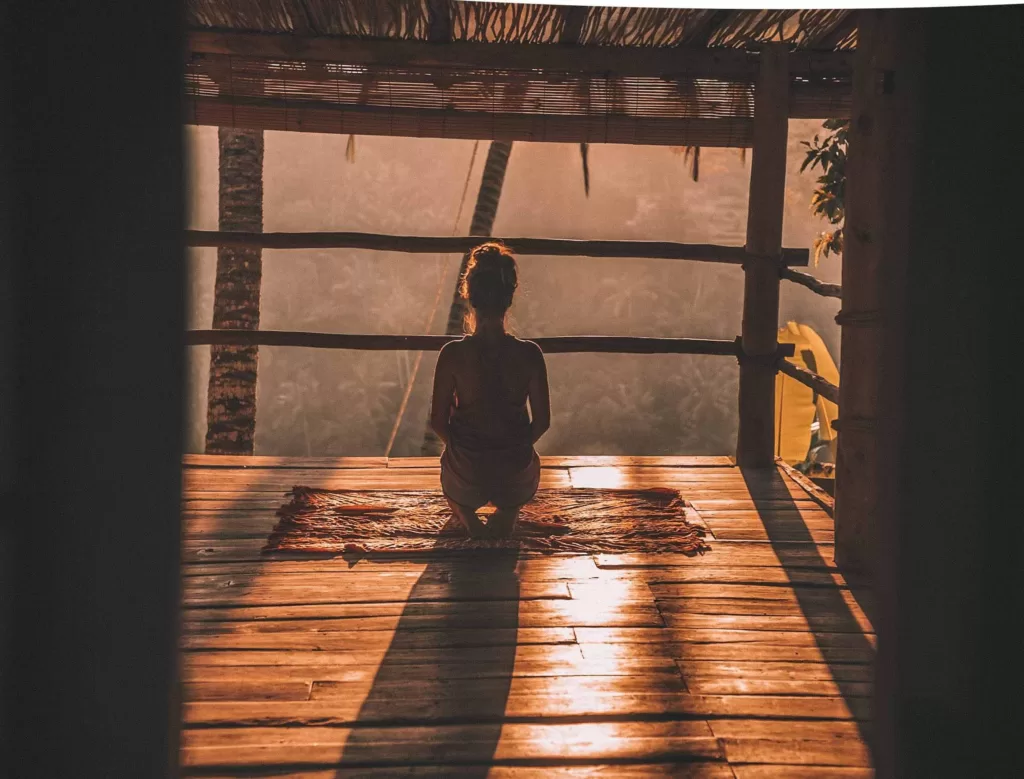
There are a variety of reasons why some people may find starting yoga challenging. Some people may have physical limitations or injuries that make certain yoga poses difficult or painful. Others may feel self-conscious about their body or lack of flexibility, which can make it hard to feel comfortable in a class setting. For some people, the mental and emotional demands of yoga can be difficult, particularly if they struggle with anxiety or stress. Additionally, some people may find it hard to commit to a regular yoga practice due to time constraints or lack of access to a class or teacher.
Years ago, I sought to develop a seated practice that I could do at any time, anywhere, in order to quiet my restless mind. I was going through significant life changes at the time, which led me to explore meditation. However, I was not sure where to start these all.
I participated in a six-week mindfulness meditation course via teleconference, taught by an American artist who later became a Buddhist monk. He was a kind and enlightened individual, and in the course, he provided clear guidance on where to begin our meditation practice. He emphasized that the foundation of our practice lies within ourselves, and that we could begin by focusing on our physical sensations and breath.
Meditation Begins with the Body and Breath
Meditation is a powerful tool for developing mindfulness and enhancing overall well-being. To begin the practice of meditation, it is important to start with the body. This means being aware of our physical sensations and using that awareness to bring us into the present moment. When we focus on the sensations of our body, we become more grounded and present in the moment, allowing us to tap into the benefits of meditation.
Another crucial aspect of meditation is the breath. By paying close attention to the sensation of inhaling and exhaling, we can deepen our mindfulness and fully immerse ourselves in the present moment. The breath is a powerful tool for cultivating mindfulness and awareness, as it is always with us and can be used as an anchor for our practice. Whether we are walking, sitting, or engaging in any other activity, we can use the breath to bring ourselves into the present moment and become more mindful and aware of our surroundings.
Starting with the body and the breath is a key component of meditation and can greatly enhance our experience of mindfulness and presence. By becoming more aware of our physical sensations and the sensation of our breath, we can cultivate deeper mindfulness and live more fully in the present moment.
Be Mindful of Your Thoughts
It’s important to remember that the thoughts that come and go in our minds, known as vritti, are not a reliable indicator of reality. They are often based on past and future experiences and can be influenced by our ego. It’s not necessary to follow them, rather to observe them and bring your focus back to the present moment, the body and the breath.
In meditation, the key is to bring our attention to the present moment, whether it be through focusing on our breath or the sensations in our physical bodies. This allows us to let go of mental distractions and become fully present.
It’s natural for our thoughts to wander, and for us to create stories in our minds to escape from reality. However, this can lead to unhappiness and a lack of mindfulness. The practice of meditation on the breath and body helps us become aware of these distractions and bring ourselves back to the present moment.
Be Non-Judgmental
Meditation is a practice that helps us cultivate mindfulness and presence, and it can be performed in a variety of ways to suit our needs and preferences. Whether we choose to sit on a meditation cushion, engage in yoga poses, or simply lie in bed, the goal is to be non-judgmental and observe our thoughts and sensations without trying to change them.
One effective technique for achieving this is the body scan meditation. This type of meditation involves focusing on each part of the body and intentionally releasing any tension or discomfort. By doing so, we can become more aware of our physical sensations and cultivate a greater sense of presence in the moment. The body scan meditation can be performed lying down or sitting, and it is a valuable tool for enhancing mindfulness and reducing stress.
Another way to be present in the moment is through mindfulness-based practices, such as paying close attention to our breath and being non-judgmental of our thoughts. By adopting a non-judgmental attitude and simply observing our thoughts, we can become more aware of them and let them pass without getting caught up in them. This type of meditation can be performed anywhere and at any time, making it a versatile and convenient way to cultivate mindfulness and presence in our daily lives.
There are many different approaches to meditation, each with its own benefits. By being non-judgmental and observing our thoughts and sensations, we can cultivate greater mindfulness and presence in the moment, whether through body scan meditations, mindfulness-based practices, or any other approach that resonates with us.
Do A “Scanning”
The body scan meditation is a powerful tool for becoming present and aware of our physical sensations. This type of meditation, also known as “scanning” in Buddhism, can be done anywhere and at any time – whether you’re out for a walk, lying in bed at night, or sitting on a meditation cushion.
To begin, find a comfortable position and relax as much as possible. Then, bring your attention to the crown of your head and begin to scan your entire body. This includes every body part and even every organ, if you’re familiar with their location. As you place your attention on each part of your body, gently release any tension that may be present. It’s important to approach this process without judgment and to remain open to any sensations that arise. Continue scanning all the way down to the bottom of your toes.
The body scan meditation is a great way to get in touch with the present moment and the sensations of your body. It can help you release tension and become more aware of your physical being.
When first starting a meditation practice, it can be extremely beneficial to find a teacher. An experienced teacher can guide you in finding the starting point of your practice and provide you with the tools and techniques to continue practicing on your own. They can also provide guidance and support, which can be especially helpful for beginners who may be unsure of how to proceed or may be struggling with certain aspects of the practice.
Having a teacher can also provide a sense of accountability and motivation to maintain a regular practice. They can also offer personalized instruction and adjustments, which can help to deepen your practice.
Meditation is a powerful tool for personal growth and self-awareness, and can bring a sense of peace and calm to one’s life. A teacher can help you to tap into the full potential of your practice and to experience the many benefits that meditation has to offer. It’s not necessary to have a teacher all the time, but it can be a good idea to have one at the beginning and check-in with them occasionally to deepen the understanding and experience of your practice.